There is a moment every parent knows.
Your child is sitting at the dining table, staring at a worksheet. The pencil is moving, the work is getting done, but the eyes are somewhere else entirely. That spark, that curiosity they were born with, is not in the room right now.
And you think: there has to be something more than this.
That is exactly the thought that led hundreds of parents to ask the same quiet question: is STEM right for my Grade 3 child? Not the glossy brochure version of the question. The real one, the one that comes with a little bit of doubt and a lot of love.
Let us talk about it honestly.
What Does “STEM for a Grade 3 Child” Even Mean?
When most parents hear STEM (Science + Technology + Engineering + Mathematics), they picture a teenager coding in a dark room or a scientist in a lab coat. Not an 8-year-old. Not their child who still loses their water bottle every single week.
But here is the truth: Grade 3 is one of the most powerful times to introduce STEM thinking, and the reason is simple. At this age, children are still naturally wired to ask “why” and “how.” They have not yet been taught that curiosity is inconvenient. They have not learned to sit quietly and accept whatever they are told. That drive to pull things apart and understand how they work? It is at its peak right now.
STEM education at this level has nothing to do with complex equations or advanced physics. It is about giving that curiosity a direction. Structured play that teaches logic. Simple circuits that show a child what electricity actually does. Building challenges that teach them failure is just the step before success.
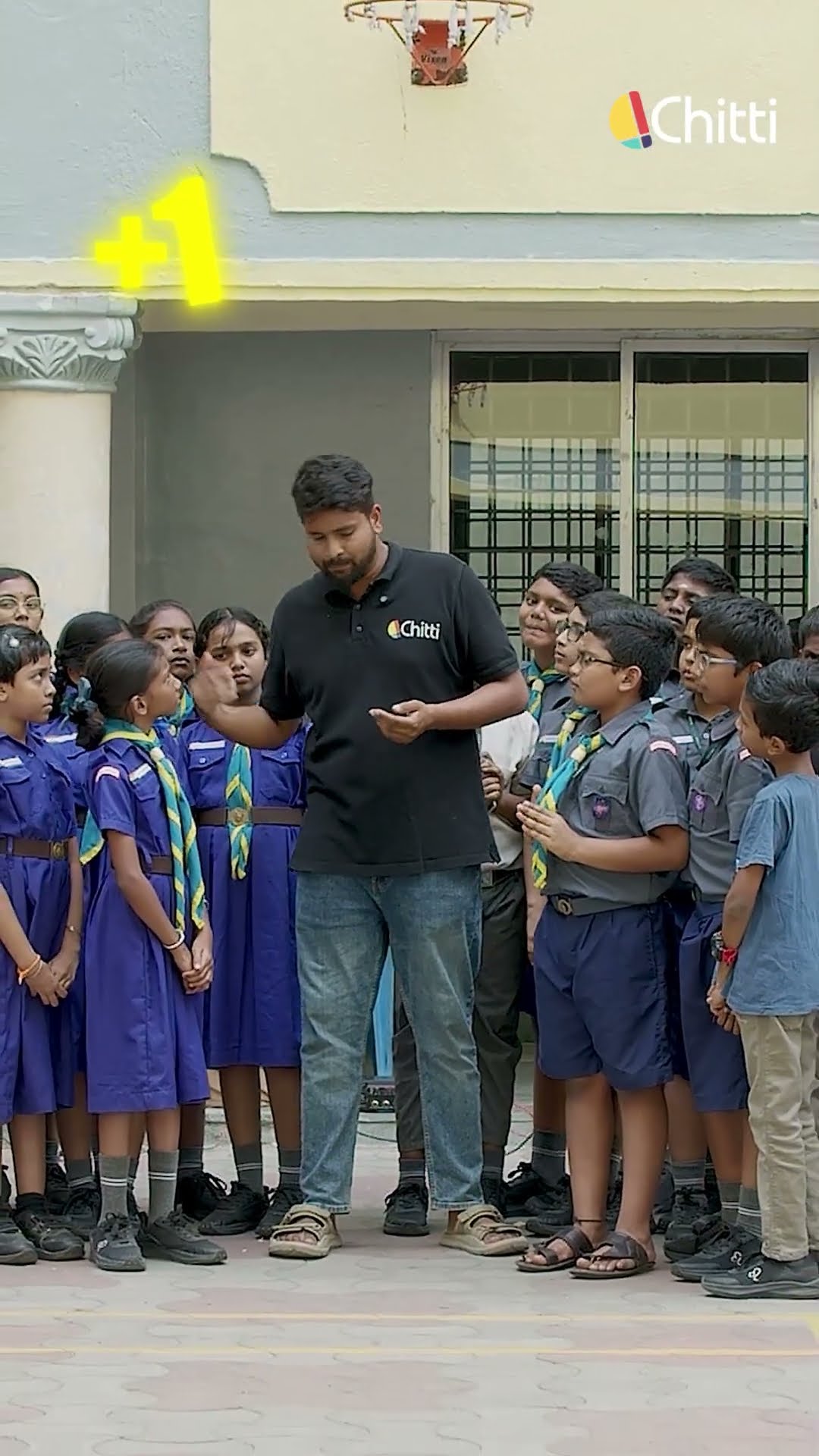
At Chitti Future School, Grade 3 students work with age-appropriate hands-on kits, basic electronics, and guided robotics activities designed for exactly this stage of development. The goal is not to make your child a scientist at 8. The goal is to make sure they do not lose the natural scientist they already are.
The Fear Most Parents Have But Do Not Say Out Loud
Here is what comes up in almost every parent conversation: “What if it is too advanced? What if my child feels lost and starts to hate it?“
That is a fair worry. Nobody wants to add pressure to an 8-year-old who already has school, homework, and a social world to manage.
But the experience that most Grade 3 parents report is the opposite of what they feared. When a child is given the chance to build something with their hands, to see a motor spin because of a circuit they connected, something shifts. The activity does not feel like learning to them. It feels like doing. And children at this age are built for doing.
One parent whose daughter joined Chitti’s Grade 3 program shared that her child used to cry before her tuition classes. Now, she asks to go early. Not because it is easier. Because it is real.
That is the difference between traditional academic pressure and STEM education done right.
What a Grade 3 Child Actually Does in a STEM Program
Let us get specific, because vague promises help nobody.
In a well-structured STEM program for Grade 3 children, a typical session might involve a simple engineering challenge, like building a structure that can hold a certain weight using limited materials. Or it might be an introduction to basic circuitry, where the child learns that a circuit needs to be complete for the bulb to light up. There may be a coding activity where they give instructions to a simple on-screen robot, learning the fundamentals of sequencing without writing a single line of code.
At Chitti Future School, the curriculum for this age group is built around curiosity-first learning. Children are not told the answer. They are given the tools and the challenge, and they find it. When they do, they own it. That ownership is what makes it stick.
The structured environment also introduces something school often misses: collaborative problem-solving. Children work together, disagree, try again, and figure it out. These are not soft skills. They are the skills that will define how your child works, leads, and creates for the rest of their life.
Rayyan did not raise his hand much in school. He was the child teachers described as “needs to come out of his shell.” Then Chitti Future School gave him something worth coming out for. A District Level Science Quiz. Hundreds of students. One winner. The shell did not break. It just turned out there was never anything wrong with what was inside it. What is inside your child is waiting for the right place to show itself. Book a free demo class at Chitti Future School today.
Does STEM at Grade 3 Actually Help in School?
Parents ask this every time, and the answer is more direct than you might expect.
STEM thinking sharpens the kind of reasoning that helps in every subject. A child who learns to break a problem into steps, who gets comfortable with trial and error, who understands that mistakes are data and not disasters, performs differently in the classroom. Not just in science and math. In writing. In comprehension. In any situation that requires thinking clearly under pressure.
Beyond academics, there is something even more important happening. Children who engage with STEM at this age start to see themselves as people who can figure things out. That identity, the belief that “I am someone who solves problems,” is one of the most powerful things a parent can give a child before they hit the harder years of school.
What Chitti Future School Parents Actually Say
A father of a Grade 3 student once said something that stayed with us:
“I did not enroll my son for robotics because I want him to become an engineer. I enrolled him because I wanted him to stop giving up when things got hard.”
Three months later, he sent us a voice note. His son had fixed a broken toy at home by figuring out the problem step by step. He did not ask for help. He just worked it out.
That is not a small story. That is the whole point.
Parents who choose STEM education early are not trying to push their children toward a specific career. They are protecting something fragile and precious: the belief that learning is exciting, that problems are puzzles, and that they are capable of more than filling in blanks on a worksheet.
So, Is STEM Right for Your Grade 3 Child?
If your child asks questions you cannot answer, if they take apart toys and forget to put them back together, if they get bored quickly in settings where they are only listening and never doing, then yes. Not maybe. Yes.
And if your child is quieter, more cautious, the kind who needs to watch before they jump? STEM, done well, is still right for them. Because hands-on learning meets every kind of learner where they are. There is no wrong way to be curious.
Chitti Future School offers STEM education, robotics for kids, coding for kids, and electronics for children from Grade 1 through Grade 8, designed to grow with your child at every stage.
The question is not whether STEM is right for your Grade 3 child. The question is how long you want to wait before finding out what they are capable of.