

Eight-year-old Maya was fascinated when she watched a butterfly emerge from its pupa in her garden. Her curiosity sparked a thousand questions: “How do plants grow? What makes our heart beat? How do animals breathe underwater?” Her mother realized that Maya’s natural wonder about living things needed the right tools to flourish. That’s when they discovered the magical world of science kit experiments designed specifically for biology learning.
Every child has this innate curiosity about the living world around them. Biology science kits transform this curiosity into hands-on learning experiences that stick with children forever.
Why Biology Science Kit Experiments Matter
Active Learning Over Passive Reading
Traditional textbook learning often makes biology seem abstract and difficult. However, science kit experiments allow children to observe, touch, and manipulate real biological processes. When kids grow their own crystals, watch bacteria cultures develop, or examine plant cells under a microscope, they’re not just memorizing facts – they’re living the science.
Building Scientific Thinking
Biology experiments teach children to form hypotheses, observe changes, record data, and draw conclusions. These critical thinking skills extend far beyond science class and help in everyday problem-solving situations.
Essential Features to Look for in Biology Science Kits
Safety First Approach
The best biology science kit experiments prioritize child safety without compromising on learning. Look for kits that include:
- Non-toxic materials and chemicals
- Age-appropriate tools and equipment
- Clear safety instructions and adult supervision guidelines
- Quality control certifications
Comprehensive Learning Materials
Quality science kits should include:
- Detailed experiment guides with step-by-step instructions
- Background information about biological concepts
- Real scientific tools like microscopes, slides, and petri dishes
- Multiple experiment options to maintain long-term interest
Progressive Difficulty Levels
The ideal biology kit grows with your child, offering basic experiments for beginners and more complex challenges as their skills develop.
Top Categories of Biology Science Kit Experiments
Microscopy and Cell Biology Kits
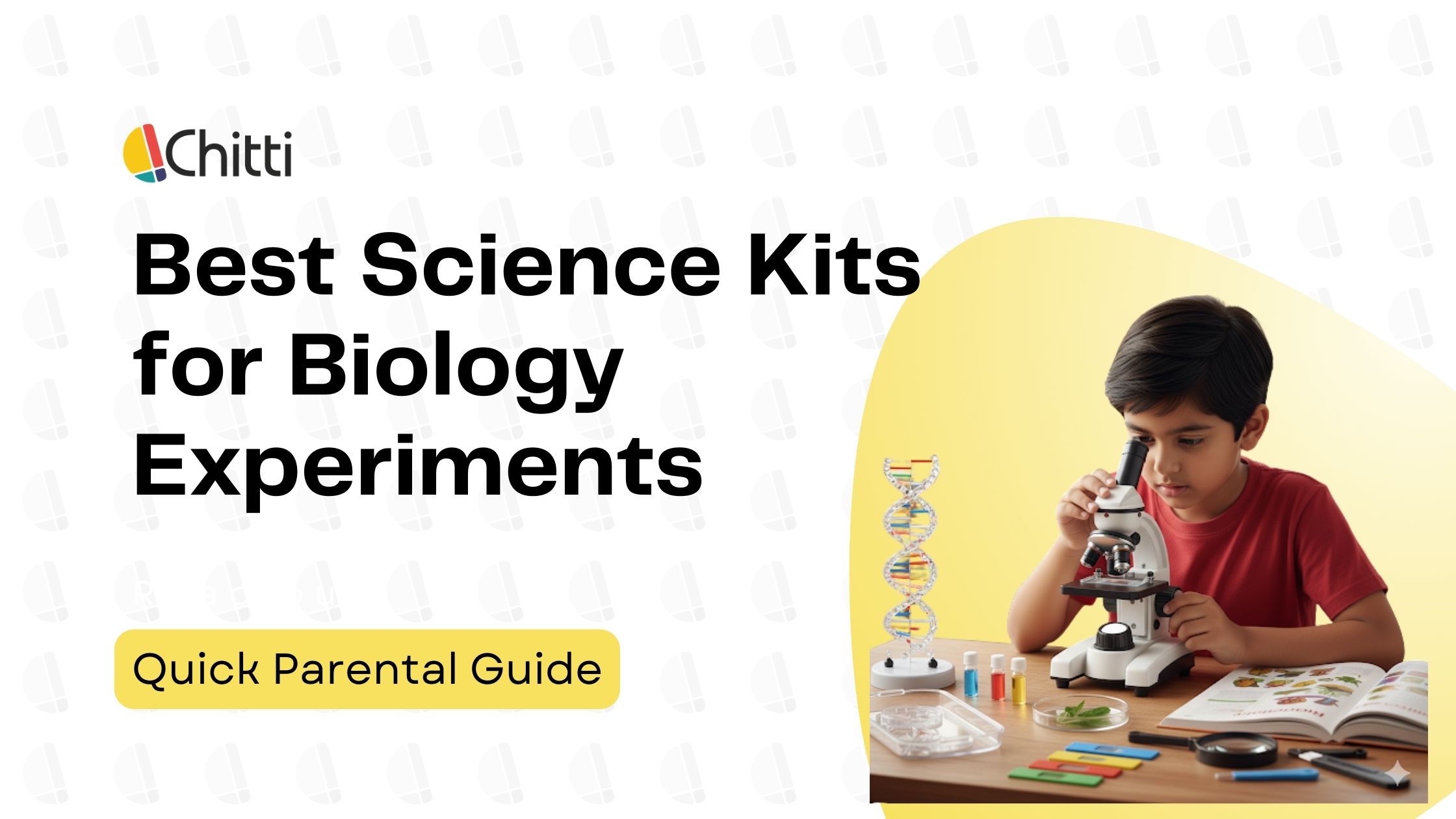
Advanced Microscopy Kits stands out as an excellent choice for young biologists. This comprehensive kit includes a high-quality microscope with multiple magnification levels, prepared slides of plant and animal cells, and tools for creating custom specimens.
What makes microscopy kits special:
- Children can observe tiny organisms invisible to the naked eye
- Prepared slides show different types of cells, bacteria, and microorganisms
- Kids learn proper microscope handling and specimen preparation
- Develops patience and attention to detail
Plant Biology and Botany Kits
Plant growth experiments fascinate children because they can observe changes daily. The best plant biology kits include:
- Fast-growing seeds like beans, sunflowers, or herbs
- Different soil types for comparison experiments
- pH testing strips to understand soil chemistry
- Growth charts and measurement tools
Popular plant experiments include:
- Growing plants in different light conditions
- Testing how various liquids affect plant growth
- Understanding photosynthesis through leaf experiments
- Exploring plant responses to gravity and light
Human Body and Anatomy Kits
Understanding how our bodies work becomes exciting with hands-on anatomy kits. These science kit experiments typically include:
- 3D organ models that children can assemble and take apart
- Stethoscopes for listening to heartbeats and breathing
- Blood pressure monitoring tools (child-safe versions)
- Digestive system models showing food’s journey through the body


Ecology and Environmental Science Kits
These kits help children understand the interconnections in nature. Features often include:
- Ecosystem building materials for creating miniature environments
- Water testing kits for analyzing local water sources
- Tools for studying soil composition and pH levels
- Materials for creating compost and understanding decomposition
Regional Considerations for Indian Families
Climate-Appropriate Experiments
Indian weather conditions offer unique opportunities for biology experiments. During monsoon season, children can study plant growth patterns, observe insect life cycles, and explore how different organisms adapt to changing weather.
Monsoon-friendly experiments:
- Growing moisture-loving plants like ferns
- Studying fungal growth in humid conditions
- Observing insect behavior during rainy weather
Incorporating Local Flora and Fauna
The best science kit experiments for Indian children should include opportunities to study native species. This might involve:
- Examining local flower structures like marigolds, jasmine, or hibiscus
- Creating butterfly gardens with plants that attract Indian butterfly species
- Studying the growth patterns of common Indian vegetables and herbs
Electronics Kit Integration for Advanced Biology Learning
Modern biology increasingly intersects with technology. Electronics KIT components can enhance traditional biology experiments:
Digital Microscopy Setup
Combining traditional microscopy with electronics kit components allows children to:
- Capture and store digital images of specimens
- Create time-lapse videos of cell division or plant growth
- Share discoveries with friends and family through digital presentations
Environmental Monitoring Systems
Electronics KIT sensors can measure:
- Soil moisture levels for plant experiments
- Temperature and humidity for ecosystem studies
- Light levels for photosynthesis experiments
- pH levels in different solutions
Solar Car KIT Applications in Biology
While primarily engineering-focused, Solar Car KIT projects can demonstrate important biological concepts:
- Energy conversion processes similar to photosynthesis
- Understanding how organisms use energy efficiently
- Exploring renewable energy concepts that parallel natural systems
Age-Appropriate Biology Kit Selection
Early Elementary (Ages 6-8)
Focus on simple observation and basic experiments:
- Sprouting seeds and watching growth
- Using simple magnifying glasses to examine insects
- Basic human body models with large, easy-to-handle parts
- Simple ecosystem observations
Upper Elementary (Ages 9-11)
Introduce more complex concepts and tools:
- Real microscope usage with prepared slides
- Multi-step plant growth experiments
- Understanding food chains and ecosystem relationships
- Basic genetics concepts through observable traits
Middle School Preparation (Ages 12+)
Advanced science kit experiments that prepare for formal biology study:
- Cell culture and bacterial growth experiments
- DNA extraction from fruits and vegetables
- Complex ecosystem modeling
- Advanced microscopy techniques
Supporting Your Child’s Learning Journey
Creating a Dedicated Science Space
Set up a designated area where children can safely conduct investigations. This space should include:
- Good lighting and ventilation
- Storage for materials and ongoing experiments
- Easy-to-clean surfaces
- Access to water for cleaning and experiments
Connecting Experiments to Daily Life
Help children see biology everywhere by connecting their experiments to everyday experiences:
- Discussing digestion during mealtime
- Observing plant growth in your garden
- Talking about bacteria and hygiene practices
- Exploring animal behavior during nature walks
Encouraging Scientific Documentation
Teach children to keep experiment journals where they can:
- Record observations and measurements
- Draw diagrams of what they see
- Note questions that arise during experiments
- Track changes over time
Parenting Skills Integration
Positive parenting tips for supporting young scientists include celebrating curiosity over correctness. When children make mistakes in their experiments, frame these as learning opportunities rather than failures. Good parenting emphasize the importance of asking open-ended questions that encourage deeper thinking: “What do you think would happen if…?” or “Why do you suppose that occurred?”
Check out for Tips for good parenting skills in science education involve participating alongside your child without taking over their discoveries. Your role is to facilitate and encourage, not to provide all the answers immediately.
Build. Test. Race with sunlight.
Introduce your child to the future of clean energy. Book a Solar Car Kit (₹299 only)
Budget-Friendly Options and DIY Enhancements
Creating Custom Biology Kits
You can enhance commercial science kit experiments with household items:
- Use mason jars for creating mini ecosystems
- Collect interesting rocks, leaves, and insects for observation
- Create simple slides using clear tape and specimens
- Make plant growth charts using poster board and markers
Seasonal Experiment Planning
Plan science kit experiments around natural seasonal changes:

- Spring: Focus on plant growth and flowering
- Summer: Study insect life cycles and water ecosystems
- Monsoon: Explore fungal growth and water cycle concepts
- Winter: Examine dormancy and adaptation strategies
Safety Guidelines for Home Biology Experiments
Essential Safety Practices
Always supervise children during science kit experiments, especially when working with:
- Microscopes and sharp tools
- Chemical solutions, even non-toxic ones
- Live specimens or bacterial cultures
- Electrical components from electronics kit additions
Proper Cleanup Procedures
Teach children proper cleanup and disposal methods:
- Washing hands thoroughly after handling specimens
- Properly disposing of biological materials
- Cleaning and storing equipment correctly
- Maintaining sterile conditions when necessary
Future Learning Pathways
Advanced Biology Topics
As children master basic science kit experiments, they can progress to more sophisticated topics:
- Genetics and heredity studies
- Molecular biology concepts
- Advanced ecology and conservation
- Biotechnology applications
Career Connections
Help children understand how biology connects to various careers:
- Medical and healthcare professions
- Environmental science and conservation
- Agricultural and food science
- Research and laboratory work
- Science education and communication
Build real circuits. Light up ideas.
Let your child explore how the world runs on electricity. Book an Electronics Kit (₹299 only)
Building Long-Term Interest
Science Fair Participation
Encourage children to develop their science kit experiments into science fair projects. This helps them:
- Learn formal scientific presentation skills
- Develop confidence in sharing their discoveries
- Connect with other young scientists
- Understand the broader scientific community
Community Science Programs
Look for local opportunities to extend science kit experiment learning:
- Nature centers with hands-on programs
- Museum science workshops
- School science clubs and competitions
- Online communities for young scientists
Chitti Future School Courses – Turn Science Projects into Career Skills
Your child’s love for experiments today can become tomorrow’s career — with the right guidance.
At Chitti Future School, kids don’t just learn science. They build, code, wire, and create.
Our Core STEM Programs
Robotics for Kids
Build moving robots, understand motors & sensors.
👉 Perfect for kids who love machines – Book FREE Demo
Coding for Kids
Develop logic through games, apps & animations.
👉 Future-ready thinking starts here – Try FREE Class
Electronics & Circuits
Learn how real devices work by building them.
👉 From bulbs to boards – Start with FREE Demo
Automation Basics
Understand smart systems, switches & sensors.
👉 Great for curious minds – Join FREE Trial Session
Conclusion
The best biology science kits transform children from passive observers into active explorers of the living world. Through carefully designed science kit experiments, young minds develop not just knowledge about biology, but the critical thinking skills and scientific mindset that will serve them throughout life.
Whether you choose a comprehensive microscopy kit, start with simple plant growth experiments, or integrate Electronics KIT components for advanced learning, the key is matching the kit to your child’s interests and developmental stage. Remember that the goal isn’t just to complete experiments, but to foster a lifelong love of learning about the amazing world of living things around us.

















